
Trouillot Essay Prize
The Michel-Rolph Trouilliot Essay Prize for Undergraduate Students was established in the memory of Michel-Rolph Trouilliot (1949-2012), a leading anthropologist of the Caribbean who received his PhD from Johns Hopkins University in 1985. This competition is open to all JHU undergraduates who are invited to submit original writing, an essay written for a class assignment, or an excerpt from a thesis or independent study. The winner of the competition receives a cash prize of $500 and the runner a cash prize of $250.
Patricia Redondo, Winner of the 2026 Trouillot Essay Prize

Patricia Redondo offers a close ethnographic reading of two texts: The Yellow Wallpaper by Charlotte Perkins Gilman and The English Patient by Michael Ondaatje. The jury was impressed by how Redondo effectively moves between a detailed attention to the language and movement within the text, to situating the reader within the historical context in which the narrator writes. This sets up the paper for an enticing comparative argument, juxtaposing the two protagonist women’s stories.
Valentina Giraldo, Runner-up for the 2026 Trouillot Essay Prize

The jury was impressed by the rich ethnographic observation and careful analysis of Valentina Giraldo-Restropo’s paper, showing how memory is not only preserved through stories and official commemorations, but also through the material and everyday infrastructures of Comuna 13. We were especially impressed by the ability to connect intimate details of guided tours, public art, and urban space to broader questions of collective memory, state power, and historical narrative. The paper is both theoretically ambitious and grounded in lived experience, demonstrating a strong anthropological sensibility throughout. By showing how local residents actively shape and contest national memory through the spaces they inhabit, the work offers an original and nuanced perspective on memory, violence, and community. It is a clear, engaging, and intellectually significant piece of scholarship, and we are delighted to honor it with this award.
Prior Essay Winners
Celine Sui, Winner of the 2025 Trouillot Essay Prize
Celine Sui has won the 2025 Michel-Rolph Trouillot Essay Prize for their essay entitled, “Henry James.”
“Celine Sui attempts the ambitious task of comparing two canonical texts by the brothers William and Henry James, and offers a sensitive, anthropological reading of both texts, particularly Henry James’ novel What Masie Knew. Sui closely examines scenes from the novel to show how it unsettles contemporary psychological theories of knowledge as articulated by William James in his Principles of Psychology, and the division therein between judgement and perception. The jury was particularly impressed by Sui’s attention to the character of Maise, and through her analysis of how the character observes and absorbs the adult world around her, Sui’s ability to articulate both the resonance between these two texts as well as the ways in which fiction is able to succeed where science perhaps finds its limits.”
Hanna Wu, Runner-up for the 2025 Trouillot Essay Prize

Hanna Wu is a recent graduate of Johns Hopkins University, where she double majored in Medicine, Science, and Humanities, as well as Anthropology. During her time in undergrad, she served as a patient advocate at Hopkins Community Connections and in leadership for both InterVarsity Christian Fellowship and Veritas Forum. Her research interests include infectious diseases, medical humanities, and global health. She will be taking a gap year to apply to medical schools this upcoming year.
Amidst the aging prison population of the U.S and shifting cultural conceptions of a “good death,” incarcerated individuals are often excluded from these discussions, suggesting that “the good death” appears unlikely for most individuals who face the end-of-life in prison. However, in the late twentieth century and the context of the AIDS epidemic, the prison-hospice movement emerged as a means of reclaiming who gets to die with dignity. In this paper, I argue that the good death is not entirely unattainable in prisons. Drawing on Hobart and Knesse’s (2020) concept of radical care, a form of care that is inseparable from systemic inequality and power structures, I contend that the full potential of radical care emerges from the traumatic messiness of structural inequalities in the carceral system. Through an exploration of the history of the inception of the prison-hospice movement, a case study of a prison-hospice established in the Louisiana State Penitentiary, and primary sources from oral histories of prison-hospice volunteers, I find that radical care constitutes an inward transformation of prison-hospice volunteers. These prison-hospice volunteers, themselves incarcerated, come to practice care not from an egotistical but situated self, learning to love, care for another human, and be loved.
Yara Changyit-Levin, Winner of the 2024 Trouillot Essay Prize
Yara Changyit-Levin has won the 2024 Michel-Rolph Trouillot Essay Prize for their essay entitled, “The Governance of Gender-Affirming Care for Transgender Jews.”
Yara is an undergraduate student majoring in Anthropology and Public Health Studies. The jury noted the “originality of the piece, and was tremendously impressed by their authorial voice, as well as their expertise in navigating anthropological literatures and archival materials.”
Their paper explores the political, social, and economic forces regulating access to gender-affirming surgery for Jewish transgender Americans. The World Professional Association for Transgender Health’s (WPATH) 2022 standards call for culturally competent healthcare, but they do not provide specifics of what this looks like for different communities. One example of this is the current lack of discussion on Jewish identities in queer theory. Yara investigates the ways in which Jewish transgender experiences appear in social theory, medical literature, and Jewish tradition in order to show the interplay of state biopower and cultural gender norms. In doing so, anthropologists will gain valuable historical and contemporary context for the ways transgender Jews negotiate their gender-related healthcare.
Holly Nelson, Winner of the 2023 Trouillot Essay Prize

Holly Nelson is a recent graduate of Johns Hopkins University, where she triple-majored in English, History, and Medicine, Science, and the Humanities. Her research interests include literature, performance studies, historiography, and the medical humanities. An avid dancer, choreographer, and actress herself, Holly has written several conference papers on twentieth-century theatre and dance, founded primarily on archival research she conducted as a Woodrow Wilson Research Fellow. Holly is excited to begin her Ph.D. studies in English Language and Literature at the University of Michigan this fall.
Holly Nelson, “A Dramatic Ethnography: Ethnographic Method as Structure in Zora Neale Hurston’s Spunk (1935) and De Turkey and de Law (1930)”
Abstract: This research explores the ways in which author and playwright Zora Neale Hurston uses the ethnographic techniques of “thick description” and “interviewing” to inform her playwriting and contextualize the Eatonville, Florida, community upon which she writes. Previous scholarship on ethnography in Hurston’s playwriting explores how material—Eatonville customs, celebrations, daily life—from Hurston’s ethnographic research appears in her plays. This research, unlike any existing scholarship on the topic, examines how Hurston uses the ethnographic method itself in her plays, allowing her dramatic works to be read, in essence, as ethnographies. With the aim of recovering two of Hurston’s unpublished plays, Spunk (1935) and De Turkey and de Law (1930), this study employs archival work with the Zora Neale Hurston Plays Collection at the Library of Congress. Through an examination of ethnographic technique as structure in these plays, in addition to comparative analysis between the plays and several of Hurston’s ethnographies, novels, and short stories, this study displays how Hurston’s ethnographic strategies are also apparent in her other literary works, thereby—to borrow terminology from anthropologist Didier Fassin—“blurring the boundaries of ethnography and fiction.”
The jury of graduate students for the Trouillot Essay Prize had this to say about Holly’s essay:
Holly’s essay takes an insightful step by delving into how Zora Neale Hurston employs the ethnographic method itself within her dramatic works. This perspective sheds refreshing light on Hurston’s writing and intellectual legacy, showcasing how careful readings of under-examined archival sources can inform how we approach the productive relationship between the literary and the ethnographic in addressing social injustice and power structures. Holly also demonstrates how ethnography as a method moves beyond the mere depiction of the quotidian and becomes a vehicle for social critique through which penetrating political dynamics such as racism and gender can be inscribed, figured, and thought otherwise. Holly’s writing is also well organized, weaving together arguments, sources, and analyses in a clear and concise manner. The essay, in a nutshell, exemplifies the intellectual rigor and critical spirit worthy of this year’s first prize.
Yara Changyit-Levin, Runner-up for the 2023 Trouillot Essay Prize
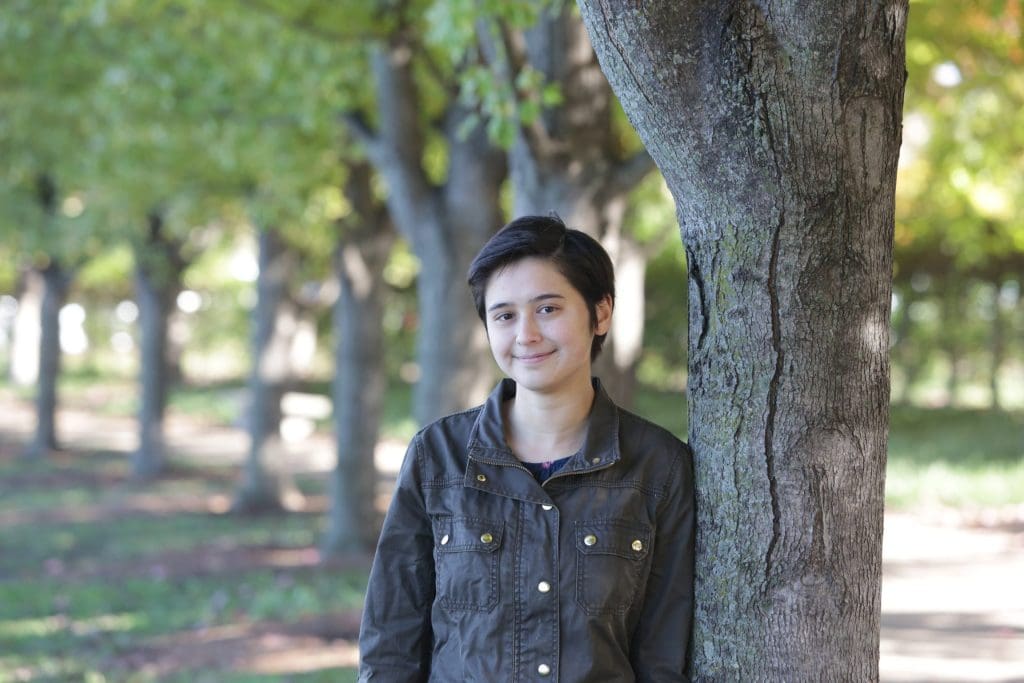
Yara Changyit-Levin is a rising sophomore with a double major in Anthropology and Public Health Studies. They have studied and written about Jewish history since they were fourteen years old, with particular interests in medieval Spain and Jewish queer identities. Outside of academics at Hopkins, Yara sings with JHU Kranti, paddles with the JHU Dragon Boat team, and serves on the board of Witness Theater.
The jury of graduate students for the Trouillot Essay Prize had this to say about Yara’s essay:
Yara’s essay offers an original insight into how Jewish kinship networks adapted to the violence of forced conversion to Christianity in post-Reconquista Spain. The essay skillfully builds on archival confessions, rabbinic legal opinion and a range of historical sources to show how the Reconquista produced two distinct diasporas with different approaches to kinship. The essay asks crucial questions of how history repeats itself in the contemporary moment with the violence of governmental policies on immigrant laws, minorities and religious conflict leading to the reconfiguring of kinship. The structure of the essay, clarity in writing, and coherent narrative show Yara’s skill as a budding scholar. Yara’s essay revisits a foundational inquiry in the discipline of anthropology by suggesting kinship networks are deeply shaped by, yet not reduced to, empire-building and religious conflicts.
Justine Prince, Honorable Mention, 2023 Trouillot Essay Prize
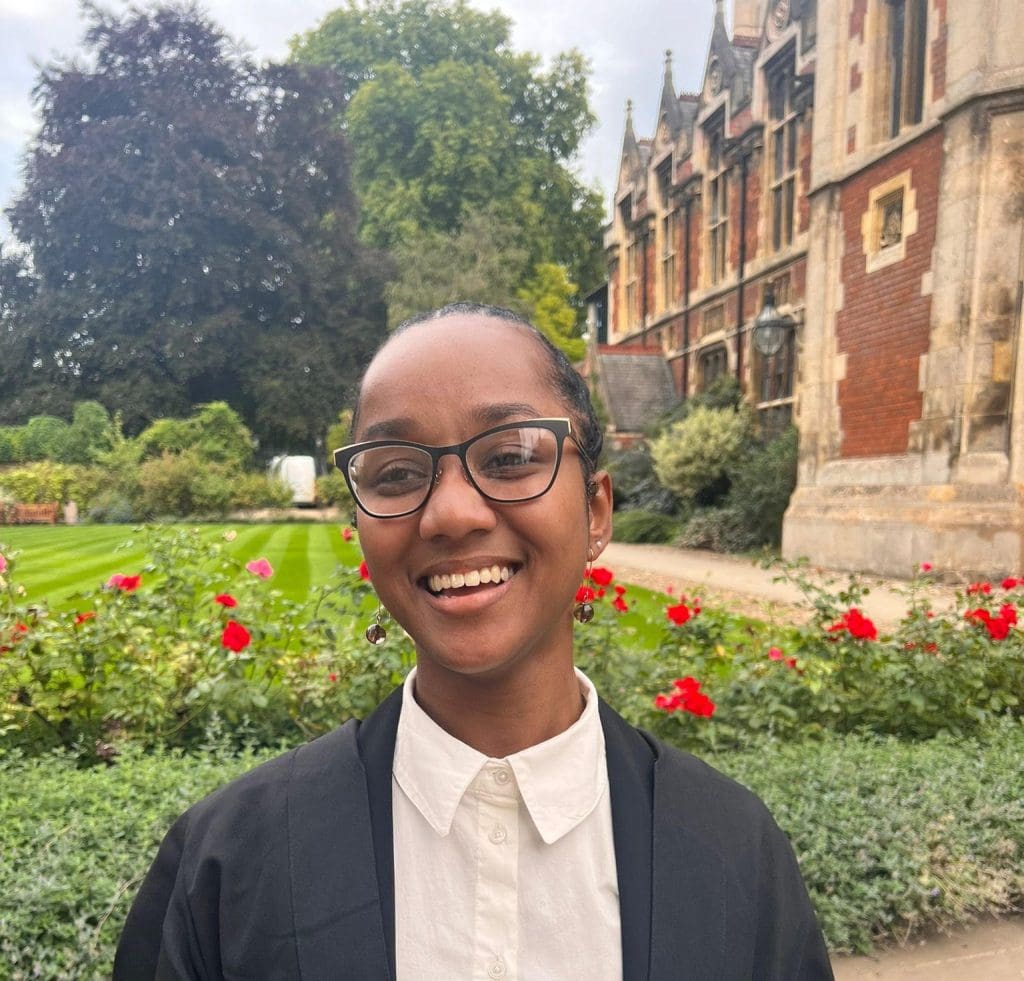
The practice of walking is viewed by many as a means to engage with the environment, as well as improve one’s mental and physical health. Yet, what invisible barriers arise within urban spaces that may discourage walking for the disabled person? With this question in mind, my Senior Thesis for the Medicine, Science, and Humanities program seeks to answer: How can the knowability of public urban space be viewed through the sidewalk, an infrastructural terrain which, for some, opens the city, and for others, restricts the places one could go?
Zamir Salman, Honorary Mention, 2023 Trouillot Essay Competition
Zamir Salman is a former exchange student at Johns Hopkins University studying a Bachelor of Science in ‘Global Health and Social Medicine’ at King’s College London. Taking courses in the Anthropology department at Hopkins, he focused his passion for literature into tackling literary analysis as an anthropological methodology and literary mediums as ethnographic fields. He advocates for art as a means of understanding the textures of the ordinary, the moral intricacies, and the antagonistic intimacies of the human experience. He is currently interested in post-colonial South Asian literature by diasporic writers so as to understand their experiences with cultural trauma, ill-being, and amnesia post-Partition.
2023 Summer Research Grant Prize Awarded to Larkin Gallup

Larkin Gallup is a rising senior from southern California studying Anthropology and International Studies with a minor in Environmental Studies. She is interested in sustainable design and development, intersectional environmentalism, and the food system. Baltimore’s history as a city shaped by industry has guided her interest in sustainable and equitable design.
Research: The project is studying the history of the South Baltimore neighborhood Hawkins Point and its eventual destruction due to decades of pollution and the encroachment of industry on its residents. It compares the moment when Hawkins Point residents were bought out to the current fight against CSX’s coal terminal in Curtis Bay, studying points in time where people and industry inhabit the same spaces, and the choices that are made to force either out. The research will be conducted from June – December 2023.